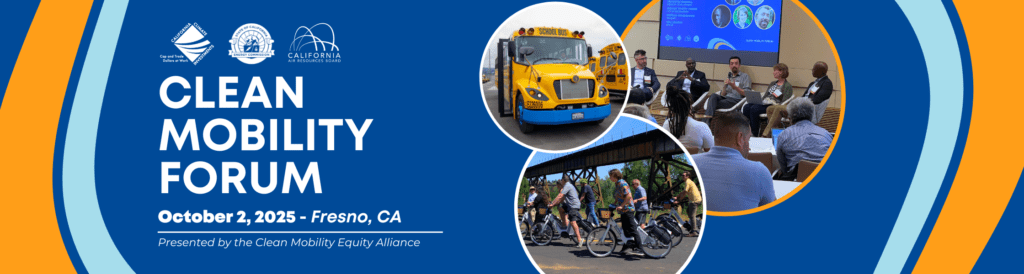
This year’s theme is Bridging Systems, Centering Equity: Advancing Clean Mobility Through Practice and Partnership. This year’s program uplifts the theme by breaking down silos and building cross-sector and interdisciplinary systems that center equity and turn clean mobility goals into grounded, community-driven practice.
To further embrace the theme, we invite guests to join sessions and panels that help them “bridge” beyond their usual areas of interest and expertise. To help you do this, we’ve identified and marked each “bridge” in this menu and the detailed program below.
Explore how communities assess local needs, build readiness, and lead the design of clean mobility and transportation solutions.
For implementers of various mobility modes to exchange insights, tools, and experiences, these sessions uplift strategies and equity-centered approaches.
Explore policy-level tools and equity strategies to embed clean transportation access and justice at scale.
Explore financial sustainability as a foundation with the leadership, operations, and community alignment required for sustained impact.
Interactive formats for connection, shared learning, and building collaborative solutions across organizations and communities.
8:15-9:15 am
Registration and Light Breakfast
Venue Foyer
9:15-9:35 am
Welcome and Opening Remarks
Main Room (Salon B&C)
9:35-10:20 am
PLENARY SESSION
From Listening to Action: Building Clean Mobility Through Community-Driven Planning
Main Room (Salon B&C)
This session will feature practitioners who have led mobility planning efforts with communities from the start—using tools like transportation needs assessments, local leadership development, and culturally grounded engagement to shape projects that reflect community priorities. Speakers will address common challenges; building trust in communities with a history of government neglect, securing funding for meaningful engagement, and overcoming capacity constraints within grassroots organizations. Attendees will hear concrete examples of how community-led processes have inspired innovative, implementable solutions—and leave with strategies, tools, and policy considerations for advancing planning that is inclusive, responsive, and rooted in equity.
Speakers:
10:20-10:30 am
Break
10:30-11:45 am
BREAKOUT SESSIONS
Getting Ready: Tools & Strategies for Transportation Equity Planning
Main Room (Salon B&C)
A hands-on session focused on helping awardees, community-based organizations, Tribes, and grassroots coalitions build internal capacity to plan and manage clean mobility and transportation projects. Attendees will explore practical tools for staff development, organizational infrastructure, and partnership building, alongside technical assistance resources that can strengthen advocacy efforts, support community-led planning, and position projects for long-term impact and funding readiness.
Speakers:
Cracking the Insurance Code: Risk, Coverage & Transportation Equity
Salon D-1
Insurance remains a major barrier for clean mobility projects—particularly for equity-focused initiatives facing high costs, limited coverage options, and complex requirements. This session features case studies from project implementers navigating these challenges and explores ongoing efforts to ease the burden. Attendees will engage in a peer discussion on practical strategies, persistent gaps, and how insurance practices can better support long-term project success.
Speakers:
Policy in Practice: Turning Community Vision into Clean Mobility Action
Salon D-2
This session explores how local community visions for clean, equitable transportation have shaped—and been shaped by—policy and funding decisions. Panelists, including community-based organizations, advocates, local governments, and policymakers, will walk through real-world examples of how grassroots needs were translated into proposals, advanced through policy channels, and ultimately implemented through grant-funded projects. The discussion will highlight both enabling policies and structural barriers, and invite participants to reflect on how communities can more effectively influence planning, policy, and funding systems.
Speakers:
Microtransit & Community Shuttles: Innovation in Practice
Salon D-3
Microtransit and community shuttles are emerging as flexible, responsive mobility options that can fill transportation gaps in underserved communities. This roundtable will explore how these services are addressing mobility gaps—alongside key challenges such as high operating costs, financial sustainability, workforce needs, and potential overlap with traditional transit. Attendees will hear from those implementing and evaluating microtransit projects and engage in peer dialogue on what works, what’s difficult, and how to build thoughtful, community-centered models.
Speakers:
11:50 am-12:50 pm
Lunch
12:55-2:10 pm
BREAKOUT SESSIONS
Poster Session
Main Room (Salon B&C)
This poster session offers a dynamic space for participants to share and learn from the work happening across California’s clean mobility and active transportation landscape. Project teams, researchers, and stakeholders will showcase highlights, challenges, and lessons learned from their mobility initiatives, including but not limited to: transportation needs assessments, implementation strategies, and pedestrian infrastructure.
Attendees will have the opportunity to explore diverse perspectives, engage in informal dialogue, and connect directly with Clean Mobility Equity Alliance members and other leaders advancing equity-focused transportation solutions. Whether you’re presenting or exploring, this session is a chance to celebrate progress, exchange ideas, and spark future collaborations.
Speakers:
Shared Mobility Roundtables: Advancing Bikeshare & Carshare for Equity & Sustainability
Salon D-1
This session offers two parallel roundtables—one focused on bikeshare and the other on carshare—giving attendees the opportunity to engage in peer exchange on the challenges and strategies unique to each mode.
The Bikeshare Roundtable will explore equitable scaling strategies, community adoption, asset protection, procurement, fleet maintenance, and long-term viability. Meanwhile, the Carshare Roundtable will focus on program design, operational challenges, insurance barriers, and funding strategies for long-term viability.
Each roundtable will be independently facilitated but held in the same room, allowing for simultaneous, topic-specific dialogue.
Speakers:
What’s Changing in Sacramento? Understanding Recent Legislation That Impacts Clean Mobility
Salon D-2
State legislation and regulatory changes are shaping how clean mobility projects are funded, operated, and scaled—especially in low-income, disadvantaged, and tribal communities. This session brings together policymakers, advocates, and implementers to break down recent legislative developments affecting transportation planning, funding programs, and reporting requirements. Panelists will also share strategies for engaging in the policy process to ensure community-driven projects remain viable and equitable. Attendees will leave with a clearer understanding of what’s changing, why it matters, and how to respond.
Speakers:
Mobilizing Opportunity: Advancing Career Pathways for an Equitable, Clean Transportation Future
Salon D-3
This session explores how clean, shared mobility, and active transportation projects can create equitable workforce pathways through partnerships with career technical education programs and community organizations. Panelists will share how they’ve developed training opportunities in electric vehicle maintenance, micromobility, and infrastructure support—alongside intentional outreach strategies to engage underrepresented communities. Attendees will leave with insights on how to integrate workforce development into clean mobility planning and implementation so that it is community-rooted, equity-driven, and future-focused.
Speakers:
2:10-2:20 pm
Break
2:20-3:35 pm
BREAKOUT SESSIONS
Moving at the Speed of Trust: Tribal-led Clean Mobility in Practice
Main Room (Salon B&C)
Access to electric vehicles and the infrastructure needed to support them remains out of reach for many tribal communities due to systemic barriers and chronic disinvestment. This session provides a dedicated space for tribal leaders and advocates to share their experiences, strategies, and challenges in developing clean mobility projects that reflect the unique needs and contexts of tribal communities. Additionally, the discussion will also explore insights regarding outreach, technical assistance, and funding pathways to support project development. Attendees will leave with a deeper understanding of the structural changes needed to advance clean mobility in tribal communities, along with planning approaches and strategies informed by tribal leadership and lived expertise.
Speakers:
Advancing Equity in Clean Mobility: A Collaborative Working Session
Salon D-1
This hands-on session builds on the Clean Mobility Equity Alliance Equity working group and brings together practitioners, community leaders, and agency partners for a collaborative deep dive into persistent equity challenges in project implementation. Attendees will engage in facilitated small-group discussions to unpack issues such as language access, inclusive design, culturally relevant engagement, and barriers in project design, administration, and implementation. Together, attendees will share tools, surface promising practices, and generate actionable recommendations for more equitable planning, implementation, and policy.
Speakers:
The Long Game: Understanding Long-Term Sustainability in Community Mobility Projects
Salon D-2
Long-term sustainability for clean and shared use mobility projects means more than securing funding—it involves ensuring continued community support, operational strength, and alignment with environmental and social goals. This session invites participants to explore, through a holistic lens, what long-term sustainability could look like, to examine how planning, partnerships, and local priorities shape a project’s ability to remain impactful over time.
Speakers:
Designing For Movement: Building Equitable Active Transportation Infrastructure
Salon D-3
This session brings together planners, advocates, and community leaders to explore how walking, biking, and rolling infrastructure can be designed and implemented to meet the needs of low-income, underserved, tribal communities, as well as offer equitable access and connectivity for people of all ages and abilities. Speakers will discuss real-world strategies for advancing safe, accessible, and connected active transportation networks—alongside challenges such as funding gaps, community engagement, and coordination with transit. Attendees will gain insights on how to integrate equity and safety into infrastructure design, while also sharing experiences in a collaborative peer-learning space.
Speakers:
3:35-3:45 pm
Break
3:45-4:30 pm
Keynote and Closing Remarks
Main Room (Salon B&C)
The closing keynote will explore how economic inclusion and environmental justice must go hand-in-hand to realize truly equitable clean mobility ecosystems. Dr. Little will highlight how frontline communities are not just beneficiaries of clean transportation investments, but active leaders in shaping clean mobility and essential drivers of innovation, implementation, and local transformation.
Speaker:
4:30-5:00 pm
Break
5:00-6:00 pm
Reception
Atrium Lounge by the Lobby